

Gary Vaynerchuk's marketing formula is simple. Make a strong video and target it well, get a large audience to watch it, then remarket to the people who watched with a clear call to action. It works. Where it breaks for most small businesses is the step Gary never mentions: what happens after someone answers the call to action. The lead arrives, nobody follows up fast enough, and the owner decides marketing doesn't work. Lead follow up is the fourth step, and it is where the sale is actually won or lost.
I believe Gary on this one. I've spent roughly 25 years in digital infrastructure and software consulting, and the pattern he describes is real. People don't buy from strangers. They buy from someone they've already seen, already heard, already started to trust. The video earns attention. The remarketing ad asks for something only after that attention has been earned. The order matters more than the budget.
So why do so many small businesses run the play and walk away convinced it was a scam?
Because the formula ends at the call to action, and the money doesn't.
What is Gary Vee's marketing formula?
Gary Vee's marketing formula is a three-step sequence. First, create content worth watching and put it in front of the right audience. Second, get that content in front of a lot of people, usually hundreds of thousands. Third, remarket to the people who engaged with a direct call to action and measure how many convert.
The insight underneath it is that attention and conversion are two different jobs. Most small business ads try to do both at once. They put a "Call Now" button in front of someone who has never heard of the company and then complain about the cost per lead. Gary splits the jobs. Earn the attention first. Ask second.
That's not a gimmick. That's how trust works between people, and ad platforms have simply made it measurable.
Why does a retargeting strategy work?
A retargeting strategy works because it narrows your spend to people who have already raised their hand. Someone who watched most of your video, visited your pricing page, or read your post is not a cold prospect anymore. They're lukewarm. Your second ad lands in a mind that already has a file open on you.
Retargeting and remarketing get used interchangeably, and Google calls its own product remarketing. The mechanics are the same either way. You tag the people who engaged, build an audience from them, and show that audience a sharper, more specific offer.
For a small business, this is the most efficient ad dollar you'll spend. You aren't paying to find people. You're paying to finish a conversation that already started.
And that's exactly where the trouble begins.
Why does lead follow up break Gary's formula for small businesses?
Lead follow up breaks the formula because it is the one step Gary's sequence assumes someone else will handle. The remarketing works, and then nobody is there to catch what it produced.
The prospect clicks. They fill out the form, or they call, or they send a message at 9:40 on a Sunday night. Step three succeeded. Gary's formula is complete.
Now look at what actually happens inside most small businesses. The form lands in an inbox nobody checks until Tuesday. The call goes to voicemail and the voicemail never gets returned. The lead sits in a spreadsheet, or a CRM nobody opens, or a sticky note. By the time someone reaches back out, the prospect has already hired the competitor who picked up the phone. We've written about how bad CRM data quietly kills deals before anyone picks up the phone, and this is the same failure from a different angle.
This is what we call the two-leak problem. Money leaks once in the ad account, on clicks that were never going to buy. It leaks a second time in follow-up, on leads that were ready to buy and got ignored. Most businesses only ever look for the first leak. The second one is usually bigger, which is why follow-up is the first lever in our guide on how to get more leads from the spend you already have.
Gary has a team closing the loop behind every campaign. The plumber running his own Google Ads does not. He has a truck, a phone, and a full day of jobs.
How fast should you follow up with a lead?
You should follow up with a lead within minutes, and certainly within the hour. A widely cited Harvard Business Review study found that companies contacting online leads within an hour were several times more likely to qualify them than companies that waited even one hour longer. The window closes faster than most owners think.
We've written a whole piece on speed to lead and why it has become a leadership question rather than a phone-answering one. The short version is this: every minute between the remarketing click and your first response is a minute you are paying for and not collecting on.
That's the part that makes me angry on behalf of small business owners. They did everything right. They made the content, they paid for the reach, they built the retargeting audience. Then the software they pay for every month let the lead sit there and die quietly.
What is closed-loop attribution, and why does it matter here?
Closed-loop attribution connects your ad spend to the revenue it actually produced, not just the clicks or form fills. It closes the loop between the ad platform and the sales record, so you can see which campaign produced a paying customer and which one produced a tire-kicker.
This is the other half of Gary's promise. He says to run the play and watch how many convert. Most small businesses can't watch that. Their ad dashboard shows conversions, which usually means form submissions. Their CRM, if they have one, shows deals. Nothing connects the two. So they can't tell whether the video campaign worked, and they can't tell whether the remarketing ad paid for itself.
AdMachine was built to close that loop. It's our managed Google Ads service, run by Ledo with a human operator approving every change. Ledo audits the account, surfaces the few decisions that matter, and the operator decides. Because AdMachine and LeadMachine share the same intelligence layer, the ad spend and the sales pipeline sit in the same place. You see spend all the way through to closed-won.
The results so far are real. One home services account went from struggling to converting at $27.31 per lead against a $60 target, which we wrote up in the AdMachine launch post. Google Ads is connected today. Meta, where most Gary-style video and retargeting lives, is next on the roadmap.
How does an AI CRM win the sale after the click?
An AI CRM wins the sale by doing step four for you. The lead arrives, gets researched, gets graded, and gets put in front of the right person with a reason to call, before anyone has to remember to check an inbox.
Here's what that looks like inside LeadMachine.
The moment a lead comes in from your website form, your Facebook Lead Ads, or your Shopify store, LeadMachine captures it and enriches it with company size, industry, revenue, and social profiles. You don't open a blank record and start Googling. The full list of sources is on our integrations page, and Shopify owners can read how the Shopify CRM side works.
Ledo, our built-in AI assistant, reads that lead and tells you whether it matters. He grades it, puts it in priority order, and tells you who to call and why. If someone came in from your retargeting campaign at 11 p.m., he makes sure it's the first thing you see in the morning, with the context you need to sound like you've been waiting for them.
And Ledo keeps watching. If a warm lead goes two weeks without contact, he says so plainly. You haven't followed up with these 12 leads in two weeks. That one sentence is worth more than any dashboard, because it's the sentence that stops the second leak.
This is what an AI-native CRM is supposed to do. Not decorate your contact list with a chatbot. Operate the follow-up so the marketing you paid for gets a chance to turn into revenue.
What does calm remarketing look like?
There's a bad version of Gary's step three, and you've been on the receiving end of it. The same ad follows you around the internet for three weeks. It adds a countdown timer. It tells you there are only two spots left. It turns a warm prospect into an annoyed one.
We build everything at Ask Ledo around a design doctrine called the Calm Operator. The rule is simple: every piece of the system should leave the person using it more clear-headed, not less. That applies to your customers as much as it applies to you.
Calm remarketing sends the next useful thing instead of a louder version of the first ask. A short case result. A one-page audit. A clear price. Then when the prospect raises their hand, someone answers quickly and knows who they're talking to. No urgency theater. No scarcity tricks. Just a business that shows up when it said it would.
What LeadMachine won't do
I'd rather tell you this now than have you find out in week two.
LeadMachine won't make your video for you. It won't turn a bad offer into a good one. If nobody is watching your content, a CRM won't fix that, and neither will Ledo. Gary's first two steps are still your job.
And Ledo won't contact your leads on his own. He proposes, you decide. Nothing gets sent, dismissed, or changed without a human making the call. That's on purpose. It's your reputation on the line, and your customers deserve a real person.
What LeadMachine will do is make sure that when your marketing finally works, the lead doesn't die in the gap between the click and the conversation.
Run Gary's play. Then finish it.
Gary is right. Make something worth watching, get it seen, and ask the people who paid attention. You'll believe in marketing for the rest of your life.
But add the fourth step. Answer fast. Know who you're talking to. Track the dollar all the way to the deal. That's the step that turns believing in marketing into getting paid for it.
LeadMachine is $58 per user per month with unlimited leads and full access to Ledo. The first 14 days are free, and you don't need a credit card.
Start your free trial or book a demo and let Ledo show you which of your leads are still waiting for a call.
FAQ
What is Gary Vaynerchuk's marketing strategy?
Gary Vaynerchuk's marketing strategy is to earn attention before asking for a sale. You create strong content, distribute it widely to a well-targeted audience, and then remarket to the people who engaged with a direct call to action. The approach works because it separates building trust from asking for money.
What is the difference between retargeting and remarketing?
The terms are mostly used interchangeably. Both describe showing a second, more specific message to people who already engaged with your business. Some marketers use retargeting for ads shown to past website visitors and remarketing for email or re-engagement campaigns, while Google uses remarketing as the name of its own retargeting product.
Why don't my ad leads turn into customers?
Most ad leads fail to convert because of slow or missing follow-up, not because the ad was bad. Leads land in inboxes nobody checks, calls go unreturned, and prospects hire the first business that responds. Fixing lead follow up usually recovers more revenue than adjusting the ads.
How fast should I follow up with a new lead?
Follow up within minutes whenever you can, and within the first hour at the latest. Research published in Harvard Business Review found that businesses responding to online leads within an hour were far more likely to qualify them than businesses that waited longer.
What is closed-loop attribution?
Closed-loop attribution connects ad spend to closed sales rather than to clicks or form fills. It links the ad platform to the CRM so a business can see which campaigns produced paying customers. LeadMachine and AdMachine share one intelligence layer, which lets small businesses track Google Ads spend through to closed-won deals.
How does an AI CRM help with lead follow up?
An AI CRM captures each lead automatically, enriches it with company data, grades it, and tells you who to contact and why. In LeadMachine, the AI assistant Ledo prioritizes new leads, flags leads that have gone quiet, and prepares you before each conversation, while a human always makes the final call.
Related reading: Speed to Lead: Makers vs. Takers in the AI Arms Race · How to Get More Leads? Start With the Four Levers You Already Paid For · AI-Native CRM: The Software That Quietly Ate My Whole Business Stack
Professional Plan
$58 /user/month
Billed Monthly. No hidden fees.
Unlimited Leads. Unlimited Ledo.
Our Latest Posts
What Can Ledo Do For You?
Ledo is your AI business intelligence partner. Updated October 7, 2026. We first published this post in January 2026 and have rewritten it to reflect what Ledo does today. The Short Answer Ledo AI...
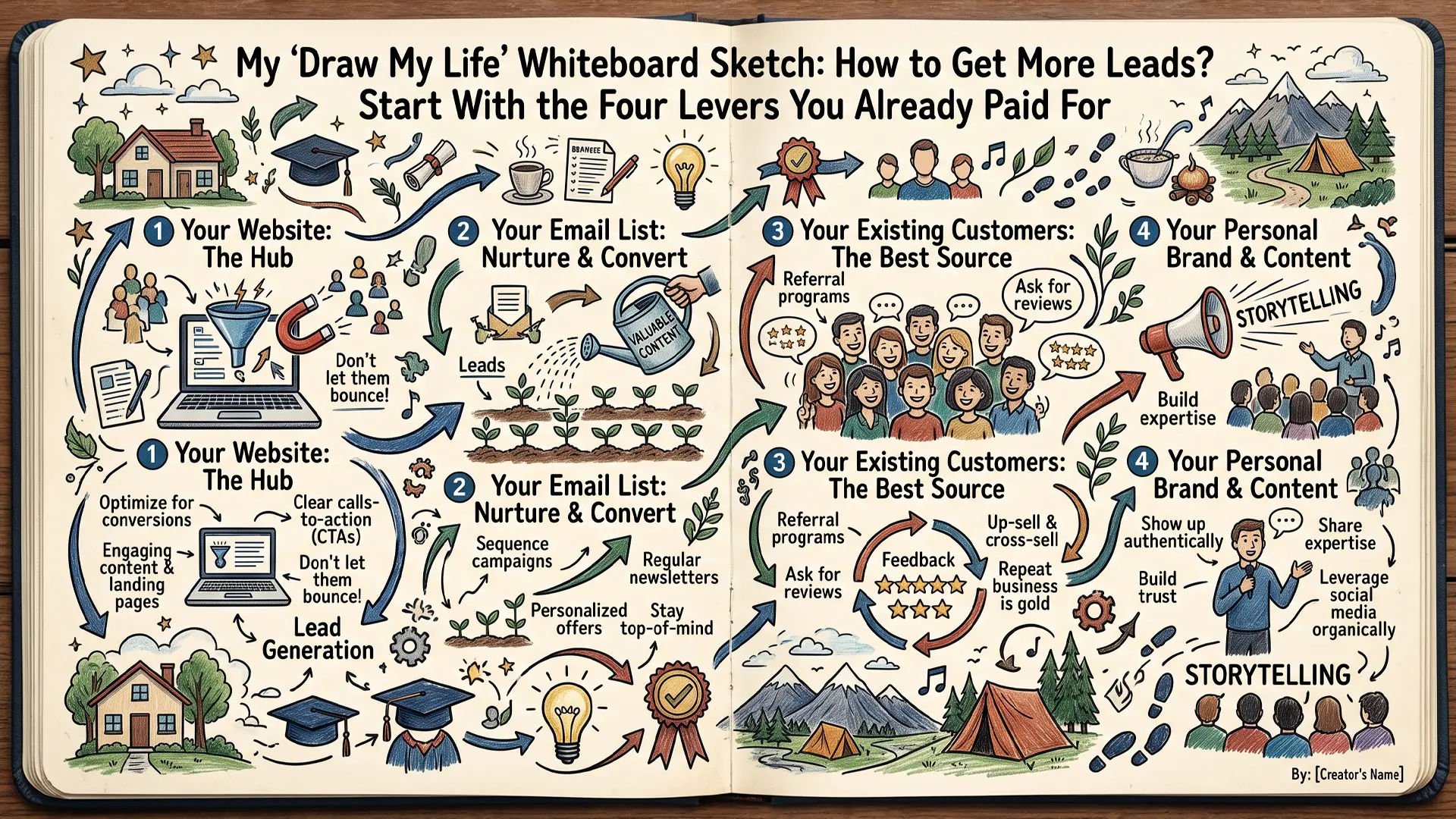
How to Get More Leads? Start With the Four Levers You Already Paid For
Most small business owners who ask how to get more leads do not have a lead problem. They have a follow-up problem, a pricing problem, a repeat-customer problem, or a margin problem, and buying more...

Speed to Lead: Makers vs. Takers in the AI Arms Race
Speed to lead has one definition in sales training. Respond to an inbound lead in five minutes and your odds of qualifying it jump off a cliff compared to waiting an hour. Every sales floor knows...