

LeadMachine is the alternative to Hubspot
You outgrew your spreadsheet. Good. That means the business is working.
Then you looked at HubSpot. Maybe you signed up for the free tier. Maybe you got a demo. And somewhere in the conversation about Hubs and seats and onboarding fees and Professional plan minimums, you realized this was not what you had in mind when you decided you needed a CRM.
You needed something that helps you sell. Not something that requires a consultant to configure before it does anything useful.
The good news is that HubSpot is not the only option. The better news is that a few of the alternatives are genuinely good — and one of them was built around AI from day one, not retrofitted with it after the fact.
Here is an honest look at the real HubSpot alternatives for small business in 2026, what each one is actually suited for, and how to figure out which one fits where you are right now.
Why Small Businesses Are Looking for HubSpot Alternatives
HubSpot built something impressive. A marketing platform, a sales CRM, a service hub, a content tool — all connected, all under one roof. For mid-market companies with dedicated operations staff and a real marketing budget, it earns its keep.
For a small business? The math gets ugly fast.
HubSpot’s Professional Customer Platform for a 10-person team in 2026 runs well into the thousands of dollars per month when you add seats, hubs, and onboarding fees. The free tier exists, but it does not include workflow automation or advanced customization — which is often the reason you wanted a CRM in the first place. And moving from HubSpot’s free tools to a Professional-level setup can easily exceed $4,000 to $5,000 per month depending on how many hubs you need.
That is not a CRM. That is a second payroll.
The complexity problem compounds the cost problem. HubSpot is organized into five product areas — Marketing, Sales, Service, Content, and Operations — each with its own tiers, its own pricing, its own onboarding requirements. A small business owner wearing four hats does not need five Hubs. They need a pipeline that works and an AI that tells them what to do next.
That gap is why this conversation is happening.
An AI-first CRM flips that. The intelligence is not an add-on. It is the foundation. Every decision about what to show you, who to call, what to say, and when to act is made by the AI before you ever log in.
What to Look for in a HubSpot Alternative
Before comparing options, it helps to be honest about what you actually need. Most small businesses evaluating HubSpot alternatives are looking for some combination of four things.
Pricing that scales with you, not against you. Per-user, per-month pricing with no hidden tiers is the baseline. Watch for platforms that bury AI features, automation, or reporting behind higher-priced plans — that is the same model HubSpot uses, just dressed differently.
Setup you can handle yourself. If a CRM requires an implementation project before it delivers any value, it is not built for small business. You should be capturing leads and working your pipeline within a day of signing up, not a week.
AI that is actually useful. There is a wide spectrum between “we added an AI writing assistant” and “the AI monitors your pipeline and tells you who to call today.” Know which one you are evaluating. The former is a feature. The latter is a different category of product.
Integrations that match your stack. If you are running a Shopify store, a WordPress site, or Facebook Lead Ads, your CRM needs to connect to those channels without a Zapier workaround. Check this before you commit.
The Real HubSpot Alternatives for Small Business
Pipedrive
Pipedrive is the cleanest visual pipeline tool in the market. It was built around a single idea — show salespeople their deals in a way that makes sense — and it executes that well. Setup is fast, the interface is intuitive, and pricing starts at a reasonable per-user rate.
The honest limitation is that Pipedrive is fundamentally a manual system. It shows you your pipeline. It does not manage it for you. The AI additions are minimal — activity suggestions, email tracking — and they do not change the core workflow. You still have to decide who to call. You still have to figure out what is going cold. If you want a clean, affordable pipeline tracker and you are willing to do the thinking yourself, Pipedrive is a solid choice. If you want the system to do more of that work, look elsewhere.
Zoho CRM
Zoho is the most feature-complete alternative at the lowest price point. The Standard plan starts at $14 per user per month, and the platform covers sales automation, workflow rules, reporting, and a decent free tier for small teams. Zoho’s AI assistant, Zia, exists and can surface predictions and anomalies. In practice, Zia is useful but reactive — it responds to what you ask rather than proactively managing the pipeline.
Zoho’s downside is complexity. It is a broad platform, and that breadth shows in the interface. For a team that wants to configure and customize, Zoho gives you the tools. For a team that wants to open the app and know what to do next, the learning curve is real.
LeadMachine
LeadMachine is the only option on this list that was built around an AI from day one, not adapted to include one.
The AI assistant is named Ledo. He lives inside LeadMachine and monitors your entire pipeline continuously — not when you log in, not when you remember to check. When you open the app, you do not see a list of everything in your pipeline. You see what matters today, ranked and explained by Ledo.
Leads are enriched automatically the moment they arrive — company size, industry, revenue, tech stack, social profiles — before you ever open the record. Ledo preps you before calls. He flags deals going cold. He surfaces the lead you forgot about two weeks ago that just opened your email three times this morning.
LeadMachine captures leads automatically from your website, Shopify store, Facebook ads, and LinkedIn. No manual entry. [Pricing is $58 per user per month](https://leadmachine.fyi/pricing/) — one price, unlimited leads, full Ledo access, no hidden tiers.
Setup takes less than an afternoon. There is no onboarding fee. No implementation project. No consultant.
This is not the right choice if you need enterprise marketing automation or a service ticketing system. LeadMachine is a sales CRM. It does that one thing at a level that nothing retrofitted with AI can match.
Why LeadMachine Is the Best HubSpot Alternative for Sales-Focused Teams
The specific gap that HubSpot fails to fill for most small sales teams is not features. HubSpot has plenty of features. The gap is intelligence.
HubSpot shows you data. A lot of data. Pipeline views, deal stages, activity logs, email open rates, meeting history — all of it visible, all of it requiring you to synthesize it into a decision. For a sales team with a dedicated ops person and an afternoon to spend in the CRM, that works. For a founder running sales alongside everything else, it is another thing demanding your attention without telling you what to do with it.
Ledo inverts that. He does not show you everything the system knows. He tells you the next decision that matters. That is not a subtle difference — it is the foundational difference between a tool built for operators and a tool built for administrators.
The Calm Operator philosophy behind LeadMachine holds that the job of good software is to reduce the cognitive load on the person using it, not increase it. Every feature decision in LeadMachine is tested against one question: does this leave the operator clearer, or more buried? HubSpot was not built with that question in mind. LeadMachine was built with nothing else in mind.
HubSpot vs. LeadMachine: The Honest Comparison
An AI-first CRM is the right choice for people who do not want to think about their CRM. That sounds like a low bar. It is actually a very high one, because most CRMs are designed to be thought about constantly — configured, maintained, cleaned, and checked.
The users who get the most from LeadMachine tend to fall into a few clear groups. Small business owners who are also their own salespeople, wearing too many hats to babysit a pipeline. Sales teams who spend more time entering data than talking to customers. Startups that need serious pipeline intelligence without enterprise pricing. Shopify store owners who want to turn their customer data into an actual sales system without building one from scratch.
The common thread is that they need a system that removes work rather than creates it.
LeadMachine vs. HubSpot, Salesforce, and Pipedrive: What the Next Generation of Salespeople Actually Needs
| HubSpot Starter | LeadMachine | |
|---|---|---|
| Price | $15-$20/user/month (limited features) | $58/user/month (full access) |
| AI | Add-on features in paid tiers | Ledo built in from day one |
| Lead enrichment | Manual or paid add-on | Automatic on every lead |
| Setup time | Days to weeks | Same day |
| Onboarding fee | Up to $3,000 for higher tiers | None |
| Unlimited leads | No — contact limits apply | Yes |
| Shopify integration | Available | Native, embedded in admin |
| Pipeline management | Manual with AI suggestions | Ledo monitors continuously |
| Free trial | Free tier (feature-limited) | 14-day trial, no credit card |
The pricing comparison deserves a note. HubSpot’s Starter looks cheaper per seat. But Starter does not include the automation, AI features, or reporting that most businesses actually need. By the time you unlock those, you are on Professional — and Professional for a small team starts well above what most small businesses budgeted for a CRM. LeadMachine’s $58 includes everything. There is no version of LeadMachine with the AI turned off.
Key Terms Defined
HubSpot alternative: A CRM platform that provides comparable or specialized functionality to HubSpot at a different price point, complexity level, or with a different architectural approach — such as AI-native design versus retrofitted AI features.
AI-native CRM: A customer relationship management platform designed from the ground up with artificial intelligence as its core operating layer. LeadMachine is an AI-native CRM. HubSpot, Pipedrive, and Zoho are traditional CRMs with AI features added to an existing structure.
Lead enrichment: The automated process of adding contextual data to a lead record — company size, industry, revenue, tech stack, social profiles — without manual research. LeadMachine enriches every lead automatically at the moment of capture.
FAQ
Q: What is the best HubSpot alternative for small business?
A: The best HubSpot alternative depends on what you need most. For a visual pipeline at lower cost, Pipedrive is clean and easy. For the most features at the lowest price, Zoho CRM is the strongest option. For a sales-focused team that wants AI managing the pipeline rather than just reporting on it, LeadMachine is the only AI-native CRM in this category — built around an AI assistant from day one, not retrofitted with one.
Q: Is there a free HubSpot alternative?
A: Zoho CRM offers a functional free tier for up to three users. HubSpot’s own free CRM is available but excludes automation and most AI features. LeadMachine offers a 14-day free trial with no credit card required and full access to Ledo — the AI assistant — from day one.
Q: What is cheaper than HubSpot for a growing sales team?
A: Pipedrive and Zoho both start below $20 per user per month at entry tiers. LeadMachine is $58 per user per month — higher than those entry prices, but the comparison changes once you factor in what HubSpot’s comparable paid tiers actually cost. HubSpot Professional for a team of five runs several hundred dollars per month before onboarding fees. LeadMachine is one price, unlimited leads, no tiers.
Q: What does HubSpot replace, and do its alternatives replace the same things?
A: HubSpot is a marketing platform that includes a CRM — it was built for content-driven lead generation, email marketing, and marketing automation, with sales features added over time. Not every alternative replaces all of that. Pipedrive and LeadMachine are sales CRMs, not marketing platforms. If you need a full marketing suite, HubSpot has fewer direct replacements. If you need a sales pipeline with real intelligence, HubSpot is actually the more complex choice — not the simpler one.
Q: Can LeadMachine replace HubSpot entirely?
A: For sales-focused small businesses, yes. LeadMachine captures leads from your website, Shopify store, Facebook ads, and LinkedIn, enriches them automatically, and gives you Ledo to manage the pipeline. It does not include a blog CMS, a marketing email platform at scale, or a service ticketing system. If those are core to your workflow, you will need to evaluate whether a separate tool covers them. If your primary need is a CRM that closes deals rather than one that manages a content marketing operation, LeadMachine is built for exactly that.
You already know you need something better than what you have. Start a free 14-day trial of LeadMachine — no credit card, no onboarding project, no consultant. Ledo will be watching your pipeline before the end of the day.
Professional Plan
$58 /user/month (Get Your Intro Pricing Now!)
Billed Monthly. No hidden fees.
Unlimited Leads. Unlimited Ledo.
Our Latest Posts
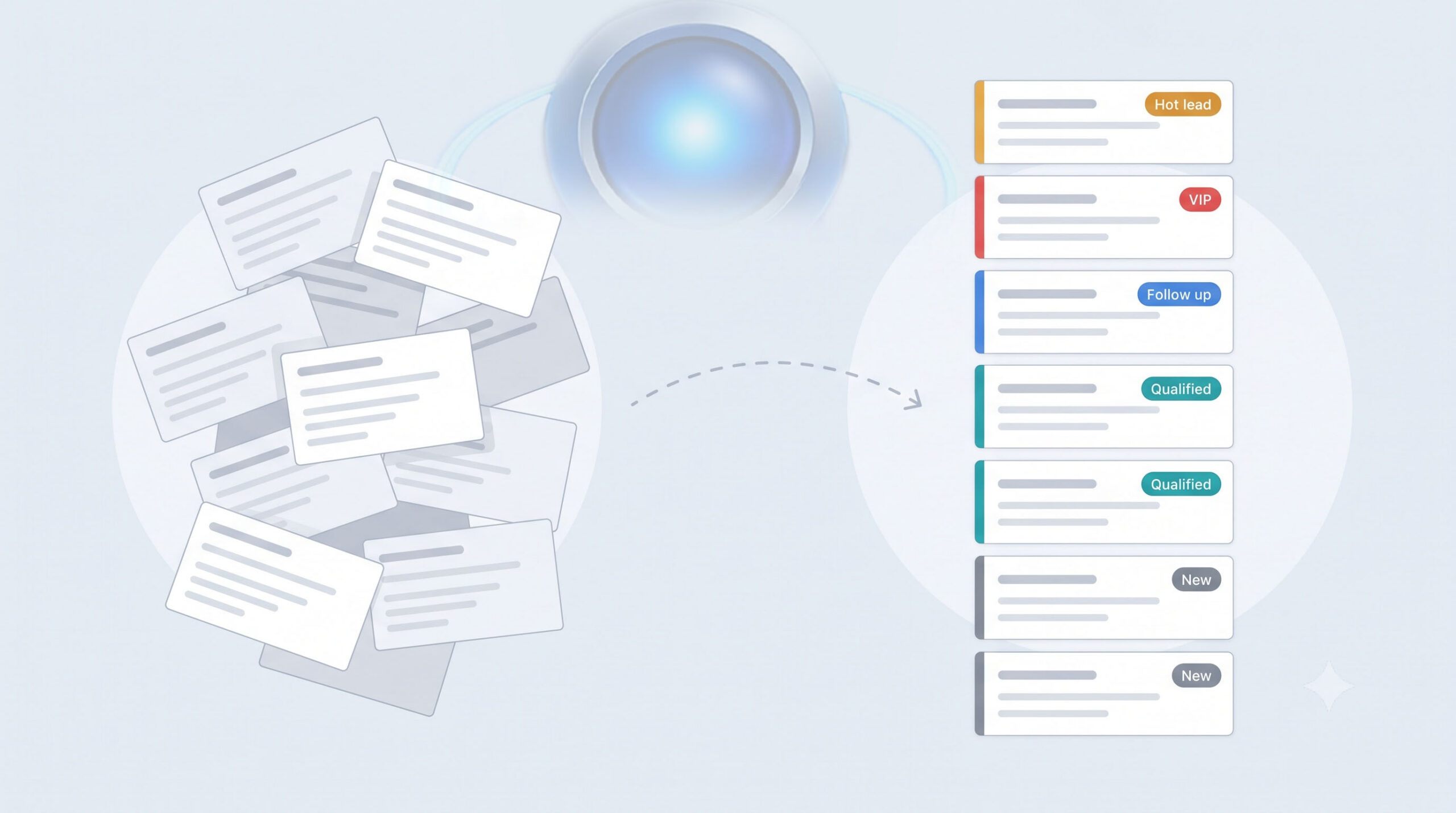
CRM Tags: How to Organize Leads Without Drowning in Them
A CRM tag is a label you attach to a lead or contact to mark something true about them right now: hot, cold, VIP, spam, ready to close. Unlike a lead’s type or status, which are usually fixed by the…

What Is an AI-Native CRM? The Complete Guide for Sales Teams
AI First? An AI-native CRM, also called an AI-first CRM, is a customer relationship management platform designed from the ground up to use artificial intelligence as its core operating layer, not as…
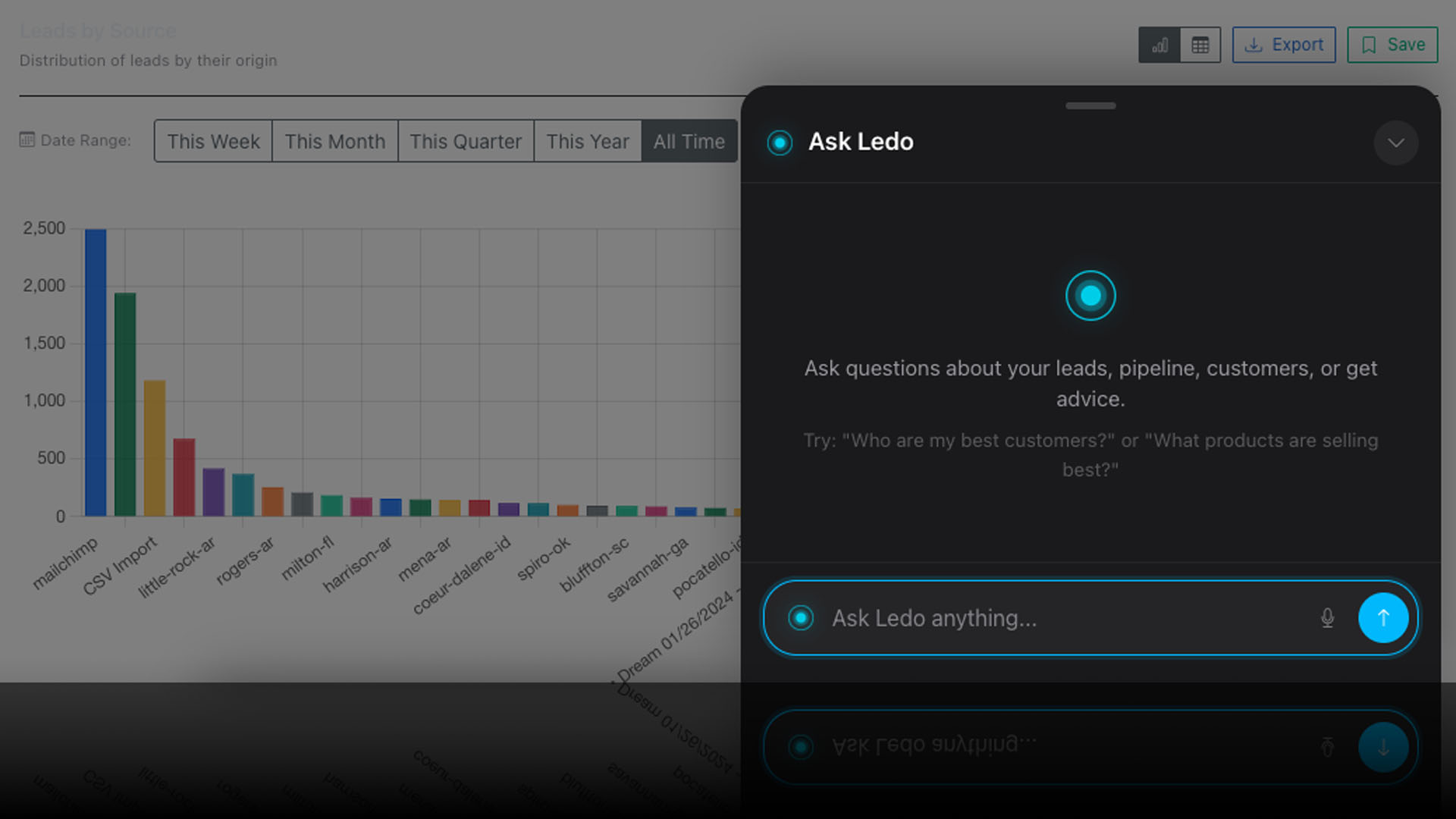
Why Your CRM Data Is Lying to You
Bad CRM data is not a technology problem. It is a people problem that technology made worse. Your reps hate manual entry. They always have. When you give them a clunky system and demand they fill it…