

Every wave of automation kills a category of work and hands the survivors a decision. This one is no different, except this time the tools to start something yourself cost less than your company's coffee budget. An AI CRM like LeadMachine will not save your old job. It was never built to. It was built to give you the pipeline, the research, and the follow-up muscle that used to require a title you didn't have.
I have a BS in Graphic Design. I came into the field right as computers were taking it over. I learned the traditional process, the light table, the X-Acto knife, waxing galleys of type and burnishing them onto boards by hand, but I was trained to master the work on a computer. My takeaway was not nostalgia. It was how tedious the old process actually was. The offset presses that used to run entire buildings got replaced by machines the size of a refrigerator, and keylining stopped being a career almost as fast as I learned it.
Here's the part nobody puts in the doom posts. Print shops still exist. Fewer of them, but the ones still standing are the ones that figured out what a computer could not do for a client. The internet did the same thing to retail. Ordering shifted online, plenty of local shops closed, and the ones that survived stopped competing on inventory and started competing on something a website could not fake. Joseph Pine wrote about exactly this shift in The Experience Economy, arguing that once a service becomes a commodity, the businesses that win are the ones staging something the commodity version cannot touch. AI is running that same filter over knowledge work right now.
Is AI Actually Destroying Jobs, or Just the Busywork Inside Them?
AI is automating repetitive, rules-based tasks first: data entry, scheduling, first-draft research, meeting scheduling, follow-up emails, and reporting. It is not, yet, automating judgment, relationships, or the ability to close a deal in a room. That distinction is the whole opportunity. The jobs disappearing are the ones built entirely out of tasks a model can already do. The jobs opening up belong to the people who know how those tasks connect to an actual sale.
That is not a comforting talking point. It is a filter, and it runs the same way it ran through prepress and retail. The work that survives is the work a machine cannot fake.
Who Gets Hurt First When AI Automates the Middle?
Not the executives. The employees stuck in the middle, doing the actual hands-on work that made the numbers look good on somebody else's slide, while the person who scheduled the call gets the commission and the team gets a gift card. If you have sat through a Google Meet that existed only to invent more work for people already buried in other Google Meets, you already know the job I am describing. It is a weekly avalanche of busywork dressed up as strategy, and it is exactly the layer AI is best at replacing.
Here is the reframe. The employee who has been quietly doing everything, the research, the outreach, the follow-up, the actual selling, already knows how to do the job. What they were missing was the system the sales executive got to hide behind. That system is not proprietary anymore. Google and Anthropic both offer free AI courses. The tools that used to require a sales ops team now run on a laptop for the price of one seat.
We built LeadMachine because we lived this. Ledo exists because we got tired of doing the work and watching someone else get the meeting.
What Is an AI CRM, and Why Does It Matter for Someone Starting Out?
An AI CRM is a system where artificial intelligence runs the pipeline instead of describing it. In a traditional CRM, you enter a lead, and a dashboard shows you what you entered. In an AI CRM, an assistant enriches the lead the moment it lands, tells you who to call and why, and takes actions like building tasks or drafting follow-ups on its own. For someone starting a business with no admin, no ops team, and no time to babysit software, that difference is the entire pitch.
LeadMachine's version of that assistant is Ledo. He does not wait to be asked. He researches every lead automatically, scores it, and hands you one prioritized action instead of a wall of charts nobody has time to read.
What Does It Actually Take to Build a Pipeline in 30 Days?
Three moves, and none of them require a business degree or a six-figure launch budget.
Discover prospects on a prompt, not a spreadsheet.
LeadMachine's Discovery tool finds prospects based on plain language criteria instead of manual list-building. You describe who you are looking for, and the system does the research pass that used to eat an entire afternoon.
Put leads into a flow, not a to-do list.
Once prospects are in, route them into an automated email campaign or work them one to one. Ledo tracks what happened to every lead after the first touch, which is the exact step most people, and most CRMs, drop the ball on.
Close the loop instead of losing the thread.
The integrations that matter here are the ones that catch leads where they already live: a website form, a Shopify store, a Facebook Lead Ad. No manual CSV imports. No leads sitting in an inbox until they go cold.
Thirty days is not a promise. It is the length of time it takes to run that loop enough times to know if it works for you. Most people never find out, because the tools they were handed at their old job were never theirs to keep.
Why Not Just Use What the Big Guys Use?
Because Salesforce and HubSpot were not built for one person doing five jobs. They were built for teams with dedicated admins and budget to match. Pipedrive gets the pipeline right but leaves the AI as an afterthought. Someone leaving a corporate sales seat to build their own book of business does not need a system that requires a consultant to configure. They need something that works the first day, at a price that does not require funding.
| Salesforce / HubSpot | Pipedrive | LeadMachine | |
|---|---|---|---|
| Setup | Admin or consultant | Manual configuration | A conversation with Ledo |
| AI included | Premium add-on | Minimal | Every feature, every seat |
| Built for | Enterprise sales orgs | Simple pipelines | One person building something new |
| Price | $150+ / user / month | $15 to $50 / user / month | $58 / user / month, unlimited leads |
The Part That Matters More Than the Software
None of this works if the person using it will not do the outreach. A CRM, AI or otherwise, does not replace the will to make the call. What it replaces is the excuse that you did not have the system to do it right. If you were the one doing the actual selling while someone else took the credit, you already have the hardest skill. The system was the only thing standing between you and doing it for yourself.
That is the wave. Not doom. Not a headline about robots taking over. A filter, the same one that ran through prepress and retail, clearing out the busywork and leaving the door open for whoever is ready to walk through it and build.
Start your 14-day free trial of LeadMachine and let Ledo build your first pipeline before you finish your coffee. Try LeadMachine free
FAQ
Is AI actually replacing jobs, or just certain tasks within jobs?
AI is automating repetitive, rules-based tasks first, things like data entry, scheduling, first-draft research, and follow-up emails. It is not yet replacing judgment, relationships, or the ability to close a deal. Jobs built entirely out of automatable tasks are most at risk. Jobs built around relationships and decisions are not.
What is an AI CRM?
An AI CRM uses artificial intelligence as the operating layer of the system rather than as an add-on feature. Instead of a dashboard that shows you what you already entered, an AI CRM like LeadMachine enriches leads automatically, scores them, and tells you what to do next.
Do I need sales experience to start a business using an AI CRM?
You need the willingness to do outreach. Many people leaving corporate roles already have the sales experience, they just never had the system, the budget, or the credit for it. Tools like LeadMachine's Discovery feature and automated email flows replace the infrastructure a sales team used to provide.
How much does LeadMachine cost to start?
LeadMachine is $58 per user per month with unlimited leads and every AI feature included. There is a 14-day free trial and no credit card is required to start.
How is LeadMachine different from Salesforce, HubSpot, or Pipedrive for someone starting out?
LeadMachine is built for a team of one to twenty five, not an enterprise sales org. Setup is a conversation with Ledo instead of a consultant or admin, AI is included at every seat instead of gated behind a premium tier, and pricing starts well below what Salesforce or HubSpot charge for comparable AI access.
Built on the Calm Operator philosophy. Software should leave you more clear-headed, not less.
Professional Plan
$58 /user/month
Billed Monthly. No hidden fees.
Unlimited Leads. Unlimited Ledo.
Our Latest Posts
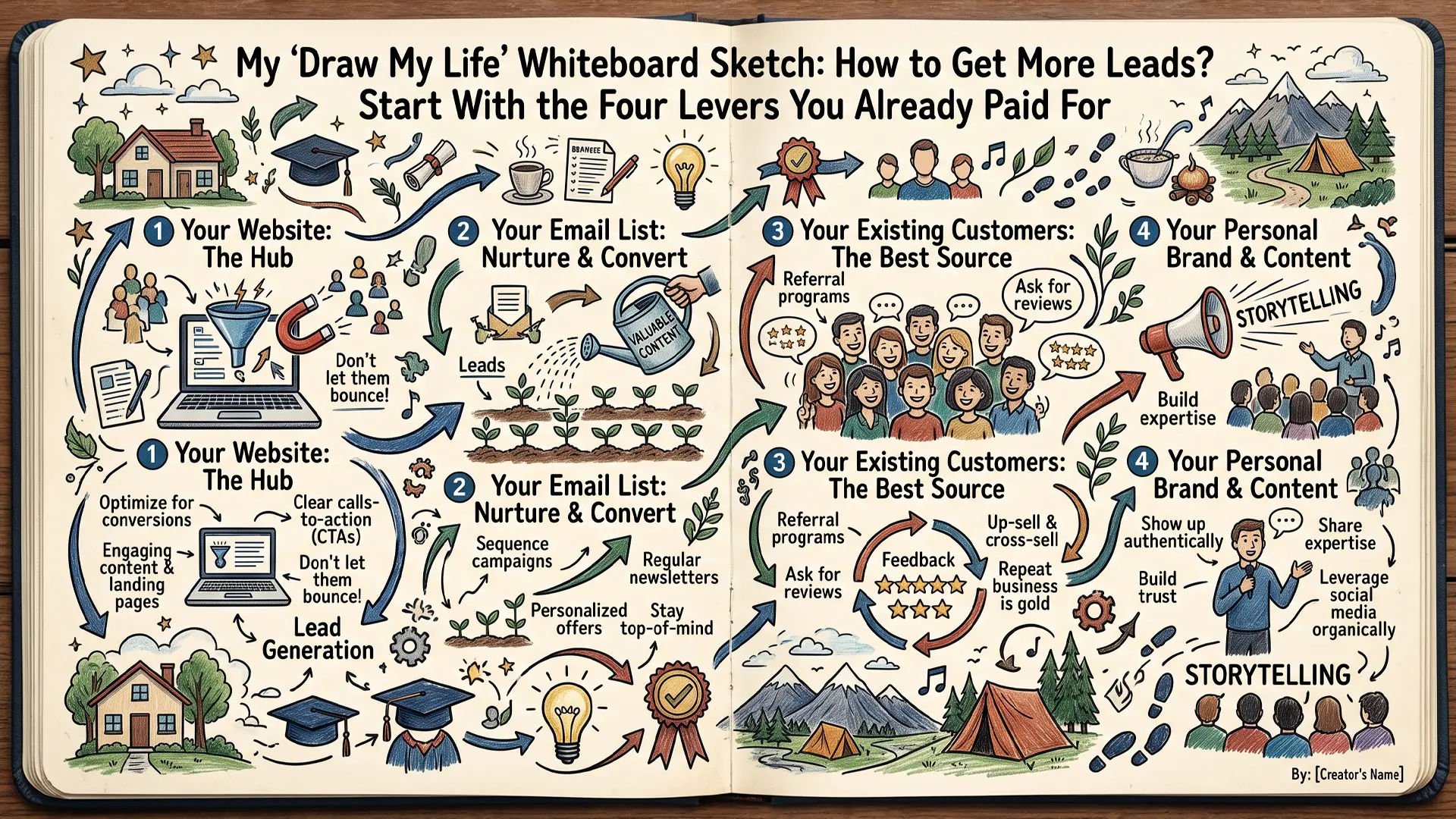
How to Get More Leads? Start With the Four Levers You Already Paid For
Most small business owners who ask how to get more leads do not have a lead problem. They have a follow-up problem, a pricing problem, a repeat-customer problem, or a margin problem, and buying more...

Speed to Lead: Makers vs. Takers in the AI Arms Race
Speed to lead has one definition in sales training. Respond to an inbound lead in five minutes and your odds of qualifying it jump off a cliff compared to waiting an hour. Every sales floor knows...

Shopify CRM: Turn Store Data Into a Sales Engine, Not a Spreadsheet
Every Shopify store owner has the same blind spot. You can see today's orders. You can see this month's revenue. What you can't see is the customer who bought once in March and never came back, or...